Archive for the ‘Branding’ Category

Who Uses Consumer Feedback the Best?

Tuesday, November 1st, 2011

The ability to effectively use consumer feedback can set any company apart from the crowd. Seeking out customer opinions will help you choose profitable directions for your company and inspire fresh ideas that appeal to your client base. Several successful companies lead the way, demonstrating how their approaches to consumer feedback have made them leaders in their industry. These three brands gave a listening ear to their loyal – and critical – customers, ultimately improving their customer experience.

Domino’s Pizza
Domino’s Pizza sought consumer feedback through the use of surveys, asking their customers to detail all that they like and dislike about their product and service. Domino’s openly shared the results with the public, and made changes to accommodate the tastes of their customers. Instead of hiding criticisms such as “cardboard crust” or “ketchup-like sauce,” Domino’s honestly shared even the harshest remarks, and then made improvements that not only improved the taste of their pizzas, but also showed their customers that their thoughts and feedback were important to the company.

Chick-Fil-A
Surveys are often completed online or over the phone. Some companies, such as Chick-Fil-A encourage extra customer participation by providing free chicken sandwiches to anyone who completes their phone survey. Chick-Fil-A’s policy of always listening and responding to their consumers has given them nationwide attention as a leader in customer service.

Intuit
Software brand, Intuit, constantly seeks input from their customers about their problems and challenges, looking for holes they can fill and problems they can solve with upgrades to software programs. In a WTN News interview with Intuit founder and chairman, Scott Cook, Cook admits to an old-fashioned idea that brand reputations are created by customers, not marketers. To shape your brand favorably, you need to always have an ear listening for customer complaints and praise.

Our knowledgeable network can help you gather and respond to the consumer feedback about your company. Read about the benefits of joining the American Marketing Association of Tampa Bay. Let us help you find new levels of success in your industry through consumer feedback. 

Related Posts:
Consumer Behavior
Tapering Your Brand to a New Economy

Tapering Your Brand to a New Economy

Tuesday, October 11th, 2011

In today’s tough economic times, consumers can become fickle. Where you once had a loyal base of customers, tighter budgets have started to motivate brand-hopping based on prices or available coupons. In order to stay afloat in a harsh financial climate, it is imperative to adapt your brand and become an irreplaceable household name for your customers.

Give Your Company a Face
As the Internet causes the world to shrink, potential customers are looking for companies they can make a personal connection with. People prefer doing business with a person they trust, rather than a distant and impersonal organization. Unestablished small businesses can begin attracting brand-loyal customers by putting a face on their company. According to the New York Times, personal branding is the most reliable vehicle for riding out the recession. It establishes familiarity and trust with a small or micro business, and it gives the individual a solid reputation that he can carry with him to future careers if needed. Social media and an active online presence can make your company become more friendly, accessible, and attractive to potential customers

Choose Quality over Low Prices
When spending stalls and the recession seems to gain more power, the temptation is to lower prices and brand your company as a low-cost alternative to other businesses – but this reputation does not create loyal customers. It is easy to compete over prices, and as you lower the worth of services and products in an endless competition, you will lose uncommitted customers who are only looking for an agreeable price tag. Instead, aim to create a brand synonymous with high-quality, impeccable customer service, and innovation. Despite attaching a steeper cost to their products, companies such as Apple maintain a fanatically loyal customer base because people believe that their design and products are irreplaceable.

Let us help you adapt your brand for the current economy. When you join our network of marketers you will receive advice, resources, and connections that will carry you through the recession and into better years.

Related Posts:
How to Sell to Baby Boomers in the Current Economy
Consumer Behavior

Using Speaking Engagements to Build and Raise Awareness

Tuesday, October 4th, 2011

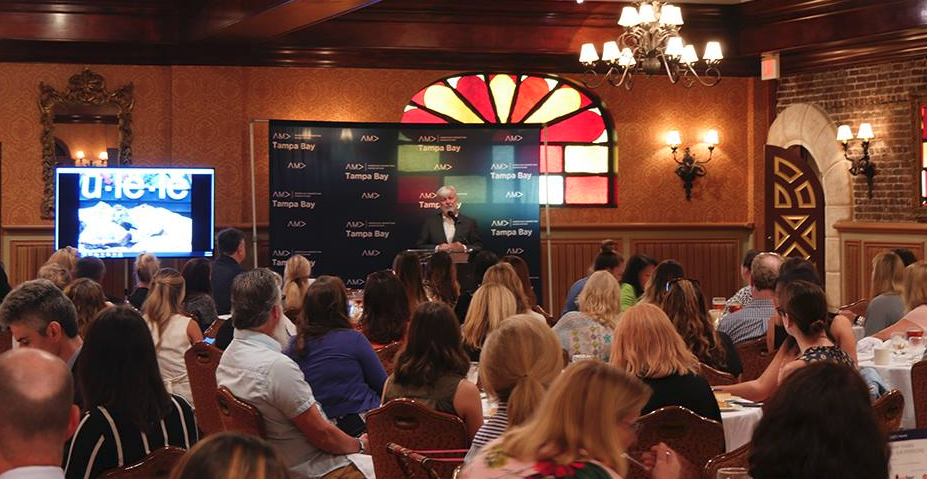
Scheduling speaking engagements is an effective, yet sometimes overlooked, way of spreading the word about your products, services, or business to prospective clients. Unlike advertising efforts, speeches place a face next to a company and encourage audience interaction. The personal feel of a speaking engagement will win your potential client’s trust in a way that other advertising campaigns cannot replicate.

Speak to the Right Audience
If your current speaking engagements are producing little results, examine the audience you are addressing. Even the most convincing sales pitch will leave the crowd inactive if you aren’t addressing your company’s target customers. Before agreeing to a speaking engagement, compare your potential audience with your company’s ideal customer. If the demographics aren’t lining up, reconsider the event.

Creating Opportunities
So you know who your ideal audience is—don’t wait for its members to contact you; create your own speaking opportunity. Contact relevant local groups and pitch your ideas for speaking engagements. If your company specializes in energy efficiency, look for environmental groups that might appreciate your expertise. You can also organize your own events, opening them to the entire community. Do you run a tutoring service? Offer regular talks about preparing for the SATs, applying for college, or mastering time management.

Call to Action
Although the majority of your speaking engagement should not be advertorial, you can slip in a subtle call to action, usually near the end of your speech. You can also open up the discussion with a question and answer period, encouraging the audience to learn more about you and your services. Don’t let your listeners leave empty-handed—provide each audience member with a reminder of your business. These small tokens don’t need to be expensive; they can range from pens to thermoses with your company name and phone number on it. As the audience begins to gather their belongings and head home, make sure you are approachable for one-on-one talks and more information.

Need some pointers for an upcoming speaking engagement? Our network can provide advice on every step of the process. To learn more about how we can help your marketing efforts, please visit our website.

Related Posts:
Creative Advertising Placements (and why they work!)
Keeping Clean: Complying With Advertising Laws

What’s the Buzz on Daily Deals Benefiting Businesses?

Tuesday, August 9th, 2011

Daily deals or group buying sites like Living Social and Groupon have become extremely popular among consumers, but you may ask, “Can this discount model work in the B2B segment and what type of ROI are they generating?”

It seems the payback would come via an increase in business in the short term, an increase in additional purchases in the future, and the chance for upselling opportunities. However, the reach of a daily deals promotion goes beyond monetary gain—and its biggest benefit may simply be the exposure your business gets.

How Do Daily Deals Sites Work?

A company can go to a daily deals or group discount site and request that their deal be promoted. You set the terms (read: fine print) for the coupon or deal, as well as a limit on how many can be sold. The sites doing the selling will promote the deal to their customers through email, social media or other means. They take a cut of the sales (sometimes 50 percent) and you see an increase in business (hopefully!).

How Does It Benefit My Business?

While your business may have to eat the cost of providing a discount to consumers, a daily deal isn’t necessarily intended to be a money-making venture. Instead, the goal is to increase visibility for your brand and get your name out there.

The brand marketing with daily deals is twofold. Not only does the deal site market to their members, but those members will often share deals with their business acquaintances —be it through social media, word-of-mouth, etc. Creating this much buzz through traditional advertising could run a company thousands of dollars or more.

Another benefit to daily deals is that they can create repeat customers. A deep discount may encourage people to try out something new, and if they like it, they may return to buy again!

And the Drawbacks?

For companies that generate a decent profit on an everyday basis, a daily deal probably won’t affect their overall revenue. However, for a company that is already struggling, running a discount could cost them more than it’s worth. With the discount itself and the commission that the discount site keeps, businesses will only earn about 25 percent of what they usually do.

If you’re looking for more information, AMA Tampa Bay has an event for you! On Friday, August 19, we bring you Daily Deals: Wielding the Power of B2B Group Buying. Kevin Wells, co-founder and executive vice president of RapidBuyr, will share his advice on how daily deals in the B2B segment. The event will begin at 11:30 a.m. and run through 1:30 p.m. The fee is $30 for members, $50 for guests and $25 for students. For more information, visit our website.

Sources:

Daily Deals sites: Top Tips for Local Businesses using Pay-on-Performance Marketing (Annica)

Pros and Cons of Daily Deals for Local Businesses (The Local Marketing Expert)

Good or Bad Business Change At Groupon, Daily Deals Sites? (Answer Guy Central)

Rebranding is an Involved Process

Wednesday, October 20th, 2010

When sales are down or a company feels that their competitors are outpacing them, the marketing department often ends up being assigned a job. They are generally told that things need to change and that they need to figure out how the change will come. One of the more common answers is rebranding. It makes sense, if what you are doing isn’t working then reinvent yourself and show everyone how much you have changed.

While rebranding has been implemented successfully in some cases, it must be done with care. One of the most common things that a brand will change is its outward appearance. An easy way to let the public know you are changing is to switch up your logo. Recently The Gap made headlines for their new logo. They unveiled it via Facebook in order to gauge sentiment from people whom they could obviously consider to be their core brand supporters. Scrolling down the comments section of the crowd sourcing venture, you’d be hard pressed to find a single positive bit of feedback. In fact most seemed to feel that the new logo is so bad that it must be a publicity stunt, as opposed to an actual change.

Yet a trip to The Gap’s website confirms that they do in fact seem to be going with this new logo. At the very least, The Gap might have saved some money on design as the new logo could have easily been developed by anyone with novice level experience using Photoshop. In short the clothes are the same and the stores still look like they did in 1991, so it appears that The Gap did not entirely plan out this rebranding. Unless everyone is playing into their hands; to be logical it must be pointed out that this article itself is free publicity.

So what should a company be doing to reinvent itself? First it’s important to consider motivations. Okay, maybe sales are down, but what is it about your brand that is making sales drop. Are competitors more up to date in their marketing communications? Has your product line become obsolete? Figuring out what the actual ailment is and addressing that (or those) issues through rebranding should be the focus. Changing logos and rolling out a “cool” new ad campaign around the same products and operational methods is a lot like rewrapping a present that wasn’t any good the first time in shinier wrapping paper.

If your image is dated, then decide what modern factors can best be applied to your brand. Do not force fit something because it seems to have good buzz right now–after all, the buzz might wear off by the end of the quarter. If others seem to be communicating better with customers, then first look at your communications. Are they honest? Do they make promises that speak to your core competencies? Is what you are saying relevant to consumer interests and current trends?

If you seem to think that the answer to all of these questions is a resounding “Yes,” don’t get frustrated. Maybe the problem is that your communication outlets aren’t effective. Feel out the ad market and look for other platforms to reach people. It’s 2010 you can put a brand in front of customers by product placement, blogging or even paying a boutique ad agency to come up with a guerilla marketing plan for you.

If you evaluate yourself and decide that it is indeed time to rebrand, then go about it in a straightforward manner. Listen to customers (both the happy and the disgruntled ones) and see what you do best and what you need to improve . If you are making changes to increase affinity, then gear marketing communications towards that. Don’t be afraid to admit that you had flaws. It seems to be working for Domino’s. The company was losing ground in the pizza market and stepped back and to reassess its approach. The company kept its logo and infrastructure but switched up the recipes and price structure (which is clearly promotional and temporary). They also came clean with customers about the fact that they needed to adapt to regain ground in a food market that is becoming fresher and better tasting every day. While it’s too early to say for sure whether or not Domino’s saved itself, it definitely looks like that rebranding strategy is taking them in the right direction, because it is addressing problems and not symptoms.

Sources:

AMA Tampa Bay

ADWeek

Yahoo Finance

Business Insider

Facebook- The Gap

Related Posts:

What’s Your Story: Harnessing the Power of Marketing through Storytelling